
Denis Karagodin’s STEPINQUEST® and the emergence of infrastructural investigation in closed systems
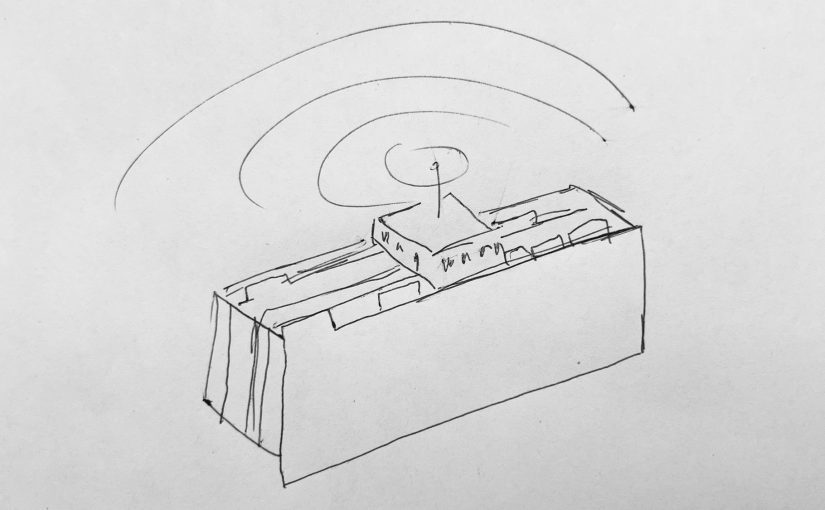
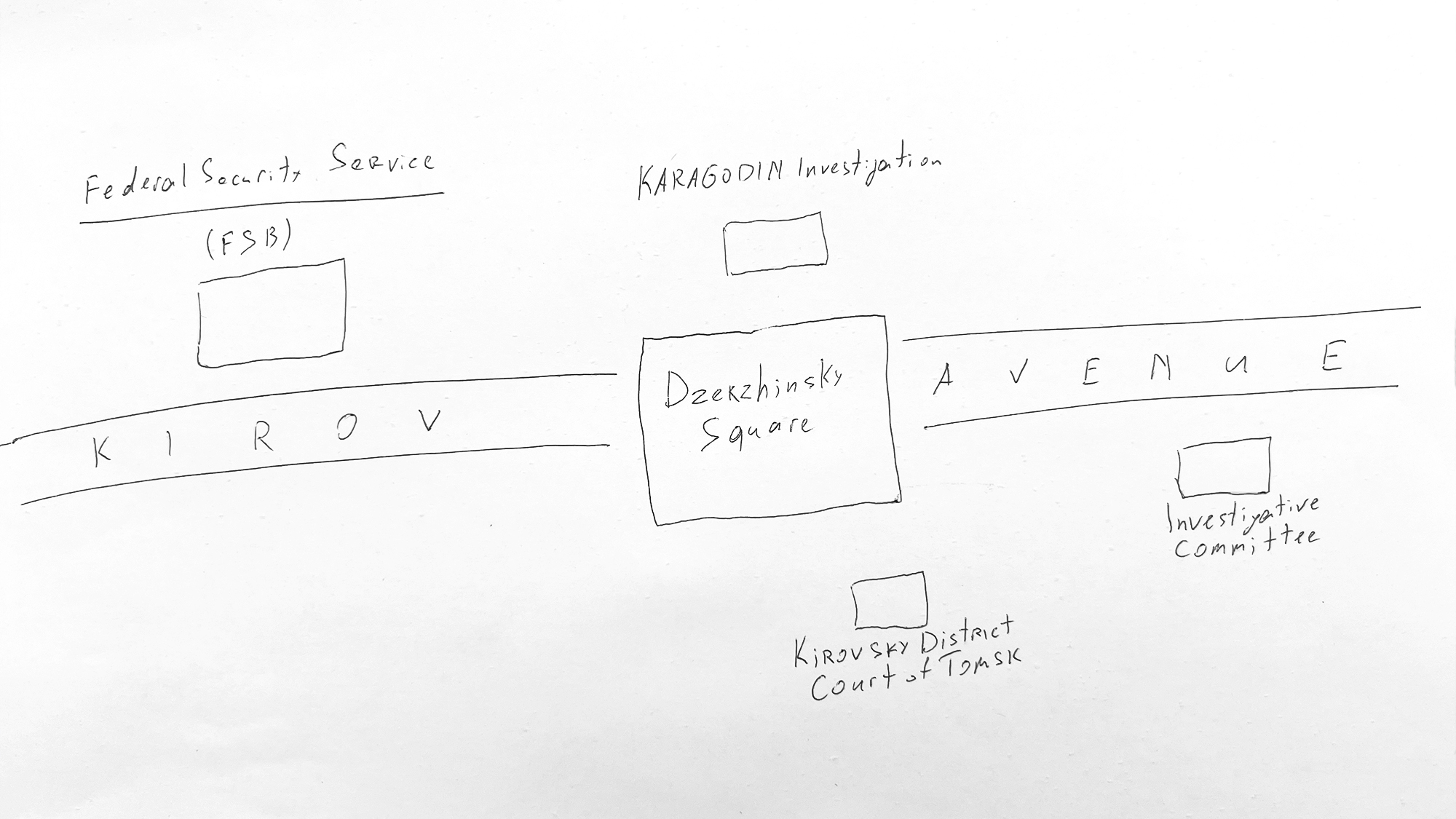
A mesh communication node of the KARAGODIN® Investigation (KARAODIN.ORG KGNg) has been deployed in direct spatial alignment with the regional FSB building in Tomsk, establishing a continuous presence at the site of a closed state archive. The investigation has thereby introduced a new infrastructural and cultural intervention at that location. Nothing has been entered, nothing has been accessed, nothing has been opened — and yet the conditions have changed.
This text examines the logic of that intervention. It traces a shift from seeking access to establishing position, and outlines a method in which investigation proceeds not through permission, but through infrastructure, redefining how memory, authority, and action operate within closed systems.
- Introduction
- The Text as Action
- From Access to Position
- What the Node Is
- Latency as Structure
- Memory as Infrastructure
- What Has Changed
- Why This Matters
- Conclusion
Introduction
This text accompanies the action described in A Node Is Placed at a Site of State Power, but it does not simply restate what was done there. The earlier document records an intervention; this one turns to the structure of that intervention: the conditions that made it possible, the shift in method it embodies, and the broader framework within which it begins to operate.
It should not be read as an after-the-fact commentary, still less as an explanatory simplification. It belongs to the same movement as the act itself, though in another register. If the first text fixed the action in public form, this one examines the logic by which that action exceeds the status of an isolated gesture and begins to take on methodological significance.
What matters here is not only that a node was placed in direct relation to a closed archive at a site of state power, but that such a placement marks a transition in how investigation can proceed under conditions of structural obstruction. The question is no longer exhausted by access, refusal, or bureaucratic delay. It begins to concern position, persistence, latency, and the reorganization of the field in which memory and authority confront one another.
The purpose of this text, then, is not to clarify the event by reducing it. It is to make legible the form of action that the event has already introduced.
The Text as Action
The operation does not end with the placement of the node. It continues in the act of writing that placement into public form. In this sense, the text is not external to the intervention it addresses. It is part of the intervention’s completion.
This is important because the action itself depends on a peculiar balance: it alters the field without breaching the archive, establishes presence without crossing the threshold of the institution, and introduces a new condition without violating the legal order that protects the site. Such an act cannot be secured by technical deployment alone. It must also be fixed discursively, in language precise enough to define what has and has not occurred, and strong enough to hold the new position in conceptual terms.
That is why the prose of the original document matters. Its repetitions are not ornamental. Its insistence that nothing has been entered, nothing has been accessed, nothing has been opened is not rhetorical excess. It is part of the structure of the act. These formulations do more than describe legality; they establish the boundary within which the intervention becomes both publicly intelligible and difficult to neutralize conceptually. The language does not merely accompany the operation. It fortifies it.
At the same time, the text does not resolve the tension it introduces. It records a presence that has been established, but not exhausted; a signal that remains possible, but not yet fully expressed. In that respect, the writing mirrors the condition of the node itself. Both remain active through restraint. Both hold a form of pressure in reserve. The effect is not one of narrative release, but of sustained fixation: the sense that something has already taken place, and that its consequences will continue to unfold from within the very condition it has made visible.
From Access to Position
A Node Is Placed at a Site of State Power, a text by Denis Karagodin, is presented on karagodin.com and karagodin.org. The simultaneity of this publication is not incidental. It reflects the same distributed logic the intervention establishes. It is not an essay in any conventional sense. It records an action that has already taken place and fixes it in a form that makes that action publicly legible.
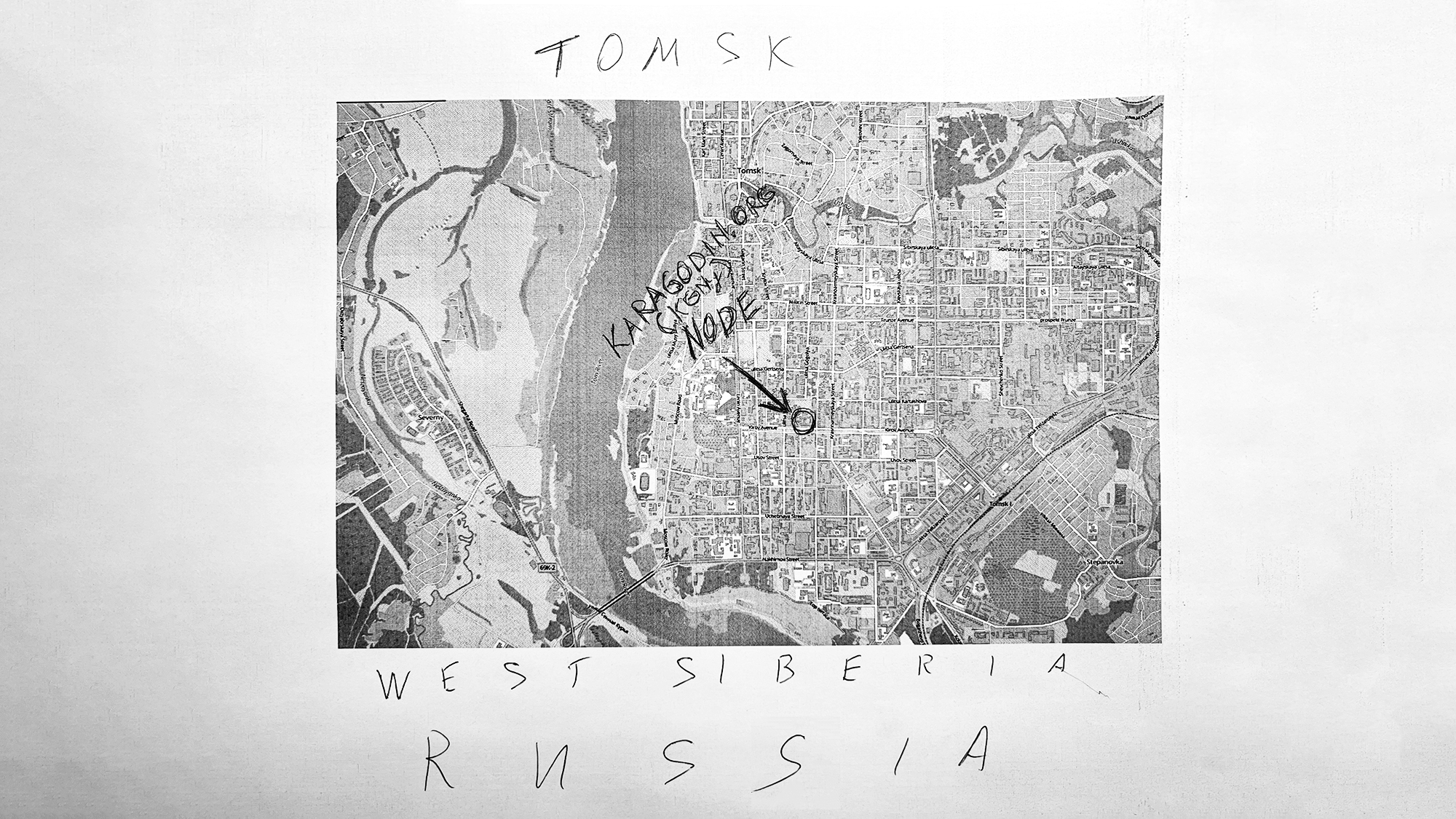
The action itself is precise. In Tomsk, a functioning mesh communication node connected to the KARAGODIN® Investigation has been established in direct spatial relation to a site of state power: the regional FSB building. The node does not enter the building, interfere with its systems, or cross any legal boundary. Nothing has been breached or accessed. And yet, the situation has changed.

For years, the investigation operated within a framework defined by access. Requests were submitted, documents sought, responses awaited. The process moved through institutional channels that maintained the appearance of legality while preventing resolution. Movement occurred, but it did not lead anywhere. Access was not explicitly denied; it was deferred, redirected, or absorbed into procedural delay. This was not an accidental feature of the system. It was its structure.
What the action makes visible is a break with that structure.
The investigation no longer depends exclusively on entry into the archive. It establishes itself in relation to it. It does not move inward; it takes position.
At the core of the intervention lies a shift that is both simple in formulation and far-reaching in its consequences: the movement from access to position.
Within the established model, access defines the limits of action. Entry must be requested, authorization granted, visibility allowed. The archive remains formally open, yet effectively inaccessible. The system does not operate through refusal so much as through absorption. It does not say no; it extends the process. What appears as procedure becomes a mechanism of indefinite postponement. Movement persists, but resolution does not occur.
The critical step is recognizing that this condition is not incidental but structural. If access is continuously deferred, then continuing to pursue it does not challenge the system — it reproduces it. The investigation remains confined within the very logic that prevents its completion.
The response, therefore, is not to intensify the demand for entry, but to shift the terms under which the problem is approached. Position replaces access.
Instead of attempting to enter the archive, the investigation establishes itself in direct spatial and infrastructural relation to it. It does not move inward; it situates itself alongside. It does not seek permission; it defines coordinates within the same field.
Nothing has been entered or extracted. The archive remains closed in procedural terms. Yet the conditions surrounding it have changed, because it no longer exists as the sole point from which the past can be addressed.
A second point has been established alongside it — legal, persistent, and independent of institutional permission. In practical terms, the node participates in a decentralized civic communication network already active in the city. In operational terms, it marks the location where memory is withheld and maintains a continuous presence at that site.
This is not a symbolic gesture. It is an infrastructural one.
The intervention exists within the network, on the map, and in the physical field. It constitutes a direct application of the STEPINQUEST® framework: a cumulative method in which successive acts do not merely respond to given conditions, but reconfigure the field in which those conditions operate.
The significance of the publication follows from this. The text does not describe the action from a distance. It fixes it. It provides legal clarity, conceptual definition, and public visibility. In doing so, it does not accompany the operation so much as complete it.
This is the turning point. The problem is no longer how to gain entry into a controlled space, but how to operate within a field where entry is controlled. Once position is established, the question of access ceases to be decisive. A new set of possibilities emerges — independent of whether permission is ever granted.
What the Node Is
The node placed in Tomsk cannot be understood as a single-layer object. Its significance does not reside in any one of its functions taken in isolation, but in the way several distinct dimensions converge within a single act.
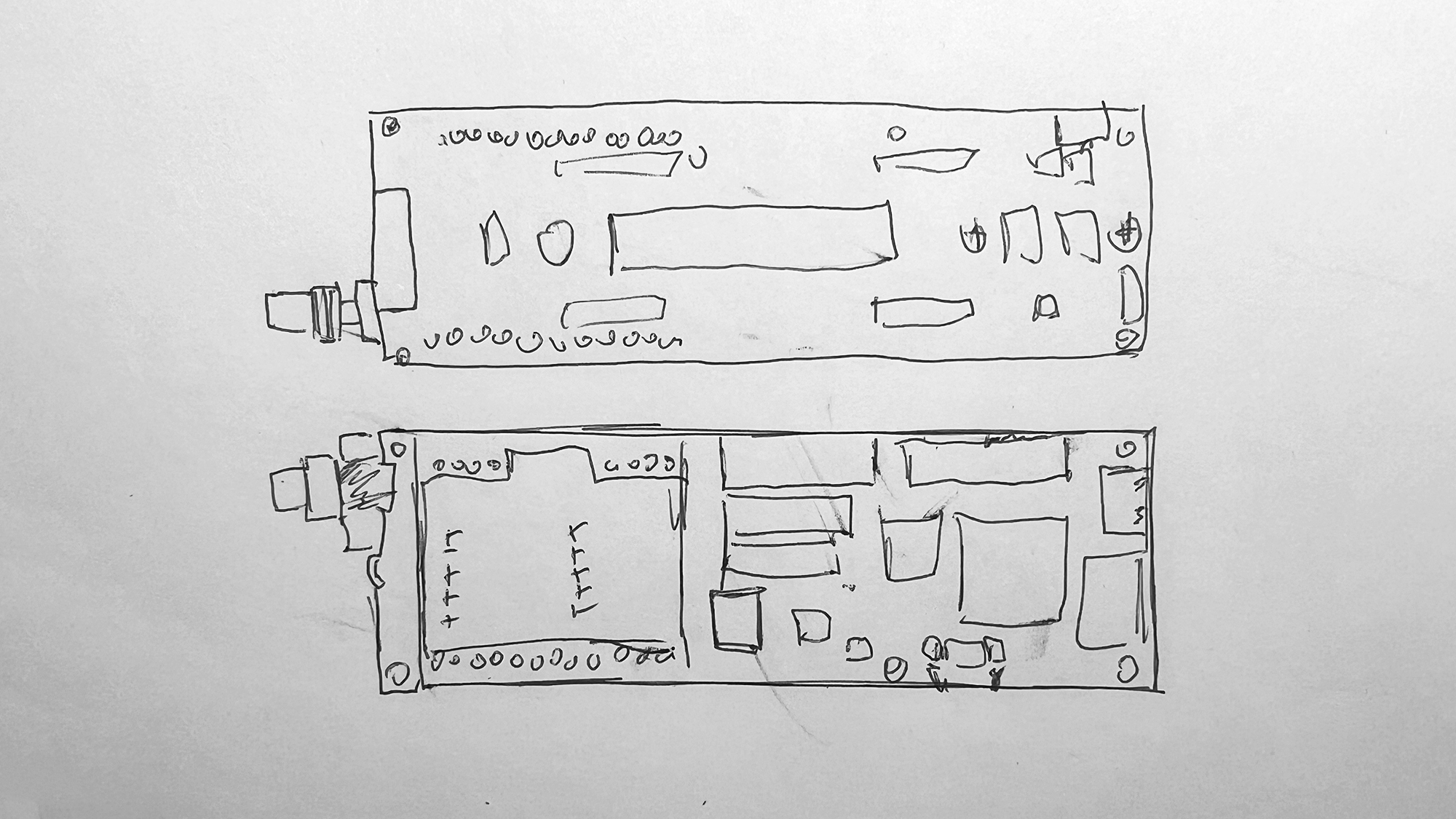
At the most immediate level, the node is technical. It is a functioning element of a decentralized mesh network, transmitting, relaying, and maintaining connectivity within an urban communication system. It operates continuously, as any other node would, integrated into an infrastructure that does not depend on centralized channels. Described in these terms, it appears as a standard component of a distributed network. But to remain at this level is to miss what the node does in relation to its placement.
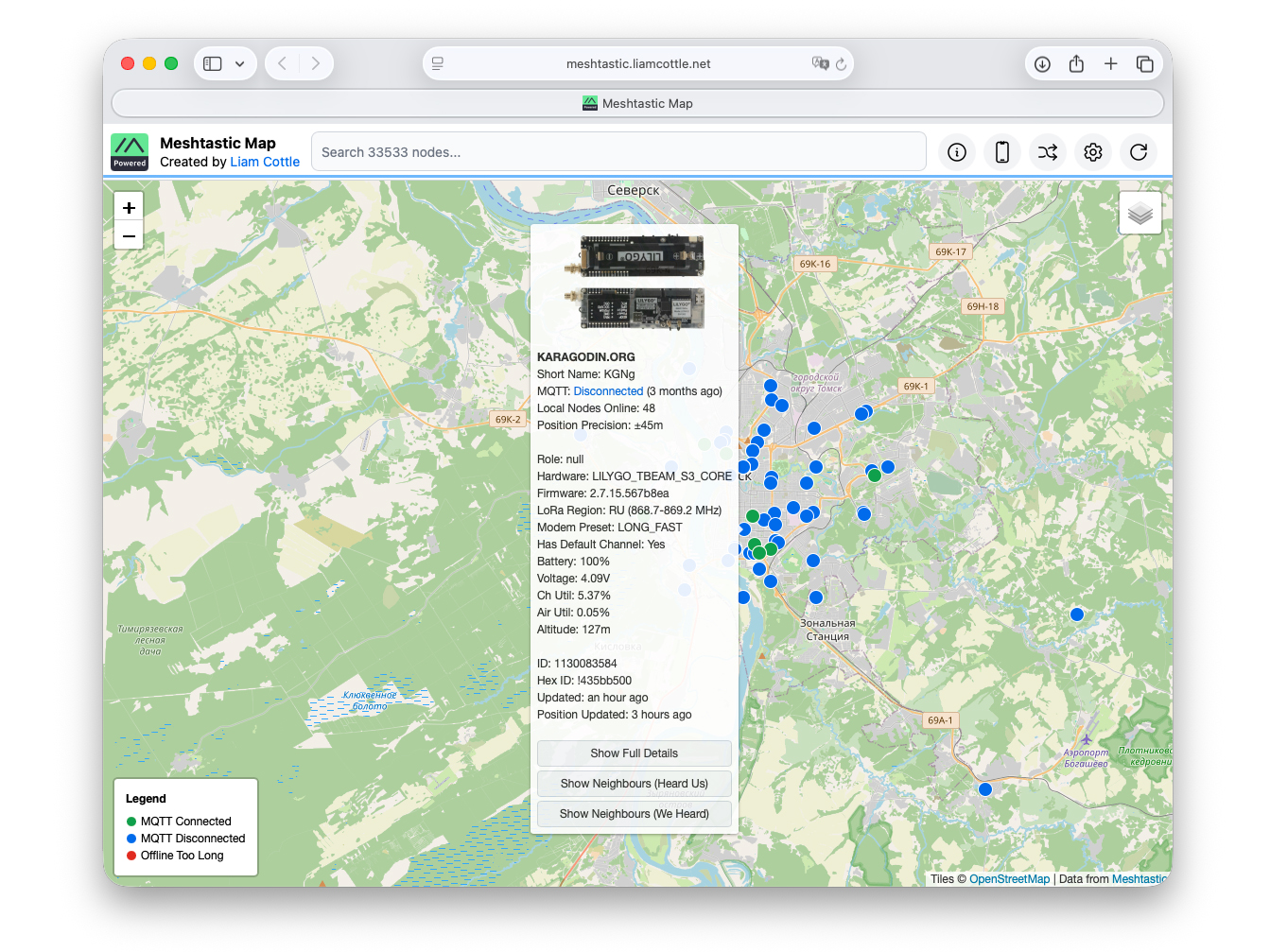
The node is also cartographic. It does not exist only as a physical device, but as a registered point within systems of mapping and spatial indexing. It appears as a named and fixed coordinate, positioned in direct relation to a site of state power. Nothing in the territory itself has been altered. The building remains unchanged, and its institutional status is intact. What shifts is not the physical arrangement, but the way that arrangement can be read. A new reference has been inserted into the system that organizes spatial perception.
Maps are not neutral representations. They structure orientation, determine adjacency, and establish what can be understood as connected or relevant. By introducing a point that aligns the investigation with the site of the archive, the intervention alters the visible configuration of the field without modifying its physical layout. The change occurs at the level of relation, not substance.
This carries an ontological consequence. The archive remains closed, but it no longer functions as a singular point of reference. It is no longer the only place from which its contents can be approached or addressed. A second point now exists alongside it — external, but not outside the same field. Nothing has been entered or accessed. Yet the condition of isolation that previously defined the archive no longer holds.
The shift is subtle, but decisive. The archive continues to operate within its own system of control, but it is now situated within a broader configuration in which other forms of presence can be established and maintained.
There is also a strategic dimension to the node’s operation. It is capable of more than it currently performs. It can transmit. It can introduce content into a shared communication environment. This capacity is real, configured, and immediately available, but it is not activated. This is not a limitation; it is a condition of the intervention itself.
What is established, therefore, is not only function but potential. The node exists as a point from which transmission may occur at any moment, without prior announcement and without dependence on centralized systems. It does not need to act continuously in order to be effective. Its presence alone alters the structure of the field in which it is situated.
Taken together, these dimensions define the node not as a device, but as a configuration: at once infrastructure, inscription, position, and latent signal. It is cultural insofar as it alters the symbolic and narrative field in which the archive operates, introducing a new point of reference for public memory.
Latency as Structure
One of the most consequential aspects of the node lies not in what it does, but in what it withholds from doing.
The system is fully capable of transmitting investigative material — names, documents, reconstructed sequences, fragments of archival evidence. The technical conditions are in place. The necessary scripts exist. The node can broadcast into a shared radio-frequency environment at any moment. This capacity is not hypothetical. It is configured, tested, and immediately available.
And yet, it remains inactive.
This inactivity is not a limitation. It is a condition deliberately maintained. In conventional terms, communication is understood as something that must be actualized in order to exist: a message is sent, received, and completed. Here, that sequence is interrupted. The capacity to transmit is established, but not executed. Presence accumulates without being discharged into expression.
What emerges is a different temporal structure, one defined not by continuous action, but by sustained potential. The signal does not need to be transmitted in order to exert an effect. Its possibility alone begins to alter the conditions in which the node operates. The surrounding system must now account for a point from which transmission may occur without warning, without negotiation, and without reliance on centralized channels.
This introduces a state of strategic indeterminacy. No announcement has been made, no confrontation initiated, no escalation declared. The archive remains closed, the node remains within legal bounds, and yet the situation is no longer stable in the same way. A capacity has been installed that cannot be easily neutralized without exceeding the very constraints that structure the system.
In this sense, latency becomes a form of power. It does not depend on visibility or continuous use. It operates through the sustained availability of action without committing to its execution. The node does not need to broadcast in order to transform the field. It is sufficient that it can.
What is established, therefore, is not a transmission, but a condition in which transmission remains permanently possible. The node has not yet spoken, but its silence is no longer empty. It is structured, maintained, and operative.
It is not the signal itself, but the condition of its permanence, that exerts pressure.
Memory as Infrastructure
What ultimately emerges from this intervention is not only a shift in method, but a redefinition of memory itself.
Within institutional frameworks, memory is typically treated as something stored. It exists in archives, files, and collections — contained within structures that both preserve it and regulate access to it. To control the archive is to control the conditions under which the past can be known. In this model, memory remains passive: it waits to be accessed, and access is granted selectively, delayed procedurally, or withheld altogether.
The situation exposed in Karagodin’s work reveals the limits of this model with particular clarity. When access is indefinitely deferred, memory does not disappear, but it becomes functionally inaccessible. It remains preserved, yet unavailable; intact, yet inoperative. What persists in formal terms ceases to function in practice.
The response is not to abandon memory, but to alter its form.
Memory becomes infrastructure.
This shift is exact. Memory is no longer defined primarily by what is stored, but by how it moves. It is no longer confined to a single location or institution, nor dependent on the permissions that govern access to that location. Instead, it becomes distributed across systems that allow it to persist, circulate, and reappear under changing conditions, beyond any single point of control.
A mesh node does not contain the archive, nor does it replace it. The archive remains where it is — closed, regulated, internally consistent. What changes is the condition in which it exists. The node establishes a parallel structure through which the archive is no longer the sole point of orientation for memory. It is not displaced, but its exclusivity is.
In this configuration, memory is no longer static. It is reconstructed through investigation, stabilized through documentation, and rendered mobile through transmission. Once it enters a distributed environment, it cannot be fully withdrawn. A signal, once emitted, does not return to its origin. It propagates, is received, recorded, and potentially retained across multiple nodes and devices. What was once contained becomes event-like — embedded in a technical and spatial field that exceeds any singular authority.
This does not eliminate institutional power. Archives continue to restrict, delay, and withhold. But they no longer fully determine the existence of memory. Control becomes partial. Persistence shifts elsewhere.
What is established, then, is not an alternative archive, but an alternative condition under which memory exists. It no longer depends entirely on permission. It depends on infrastructure.
What Has Changed
Nothing has been opened.
The archive continues to operate as a closed system. Its procedures continue to function as before. Access is still regulated, delayed, and selectively granted. In formal terms, nothing has been altered within the institution itself. The system remains intact, operational, and internally consistent.
And yet, the situation is no longer the same.
What has changed is not the internal structure of the archive, but the field in which it exists. Previously, the archive functioned as a singular point. It defined the terms under which the past could be accessed, interpreted, and made visible. Even in its partial openness, it maintained a practical monopoly — not through absolute prohibition, but by controlling the conditions under which access could occur.
That condition no longer holds.
With the placement of the node, a second point has been established in direct relation to the archive — one that does not depend on its permissions, does not pass through its procedures, and does not rely on its internal logic in order to function. Nothing has been entered or extracted. Yet the exclusivity of the archive has been altered.
This does not replace the archive. It relativizes it.
The archive remains a center, but no longer the only one. It continues to regulate access, but it no longer fully defines the structure within which memory can be positioned, articulated, and sustained. The field in which it operates is no longer singular. It becomes multiple.
Within this expanded field, different systems coexist: an institutional structure that controls and restricts, an investigative process that reconstructs and interprets, and a distributed infrastructure that transmits and persists. None of these cancels the others, but none fully contains the others. Their coexistence is what reconfigures the conditions of authority.
Authority, in this configuration, is no longer concentrated in a single point. It becomes distributed across positions that overlap, interact, and at times counterbalance one another. Control remains, but it is no longer absolute. What was once isolated is now held in relation.
The archive is still closed.
But it is no longer alone.
Why This Matters
What has been established here is not an isolated gesture. It is a method.
Its significance lies in its reproducibility. Nothing in this act depends on exceptional access, hidden resources, or unique conditions. The logic can be repeated. A node can be placed elsewhere. Another position can be established. The same shift — from access to position — can be enacted in relation to other sites where entry is controlled and memory is withheld. What has been demonstrated is not a singular intervention, but a transferable structure.
This introduces a different horizon for civic action. Traditionally, resistance to institutional closure has taken recognizable forms: legal appeals, public campaigns, protest, or direct confrontation. Each of these, even when oppositional, remains tied to a framework in which access is the central problem. They operate within the logic they seek to challenge.
What is demonstrated here is another possibility. Entry is not forced; adjacency is constructed. Permission is not demanded; position is established. Centralized channels are not confronted directly; they are circumvented through distributed infrastructure. This does not replace existing forms of action, but it adds a new layer — quieter, more persistent, and more difficult to neutralize without disrupting the broader systems in which it operates.
At the same time, the nature of investigation itself is redefined. It is no longer confined to documents, archives, and institutional responses. It extends into infrastructure, spatial positioning, and the organization of communication environments. Investigation becomes not only a process of uncovering the past, but a practice of establishing presence in the present.
The implications extend beyond a single case. Wherever memory is restricted, wherever archives are controlled, wherever access is systematically deferred, the same logic applies. The archive may remain closed, but it no longer remains uncontested in how it is situated within a wider field of relations.
What is at stake is not only information, but the conditions under which information can exist, move, and persist.
This is why the act matters. It does not resolve the past or open the archive. It does not complete the investigation. But it changes the terms under which all of this can continue.
What began as a question of access has become a matter of position.
A position has been established.
And once established, it cannot be fully withdrawn.
Conclusion
The action has already taken place.
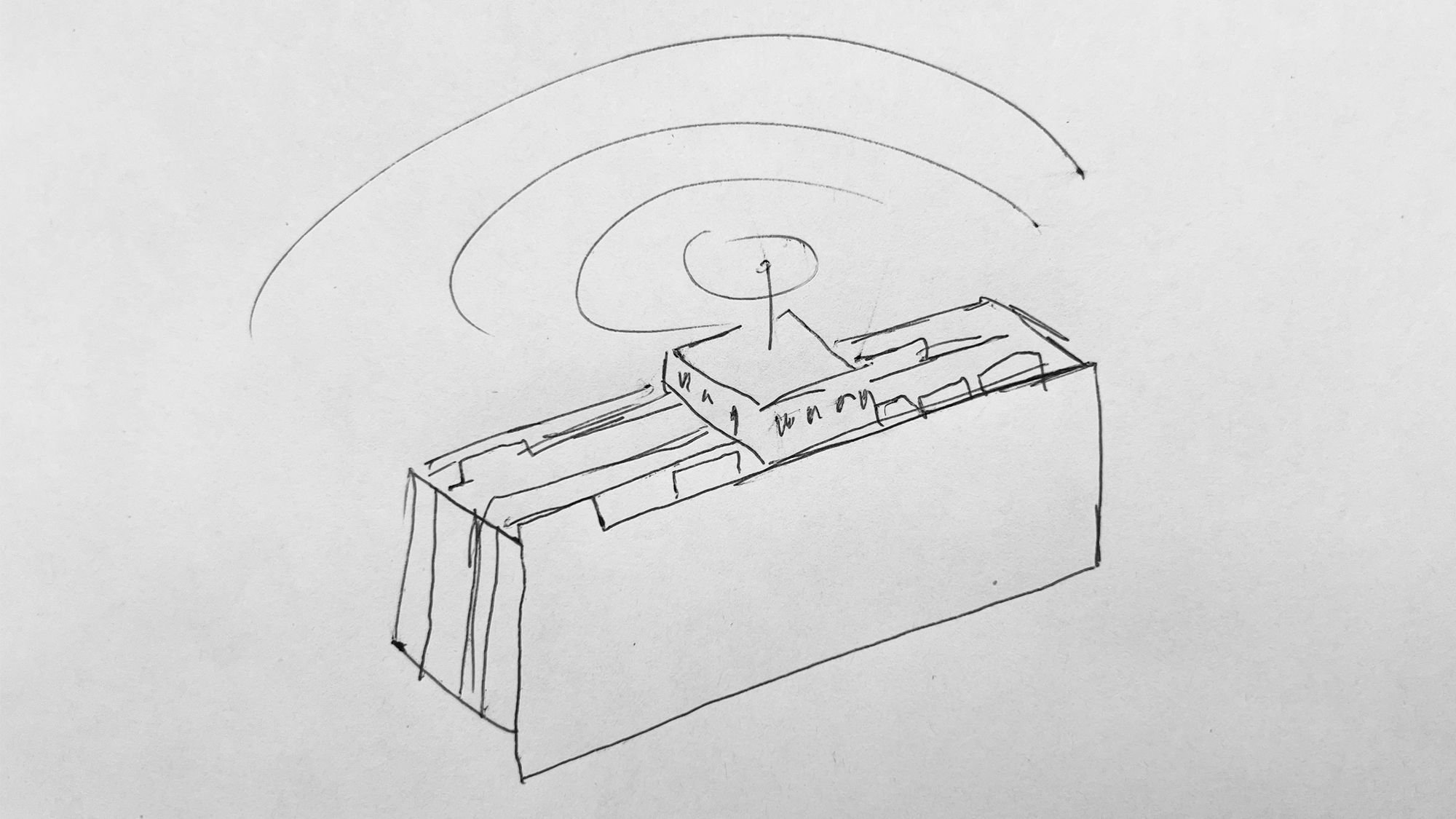
A position has been established within the field it addresses. It does not depend on access, permission, or resolution. It persists as a condition that cannot be reversed by procedure alone.
Nothing has been opened.
And yet, the structure that once made opening decisive has been altered.
Reference
Support
This work is produced as part of Denis Karagodin’s independent research and writing.
Its continuation is sustained over time through personal effort and, in part, through public support.
Further information: karagodin.com/donate
Discover more from Denis Karagodin
Subscribe to get the latest posts sent to your email.