
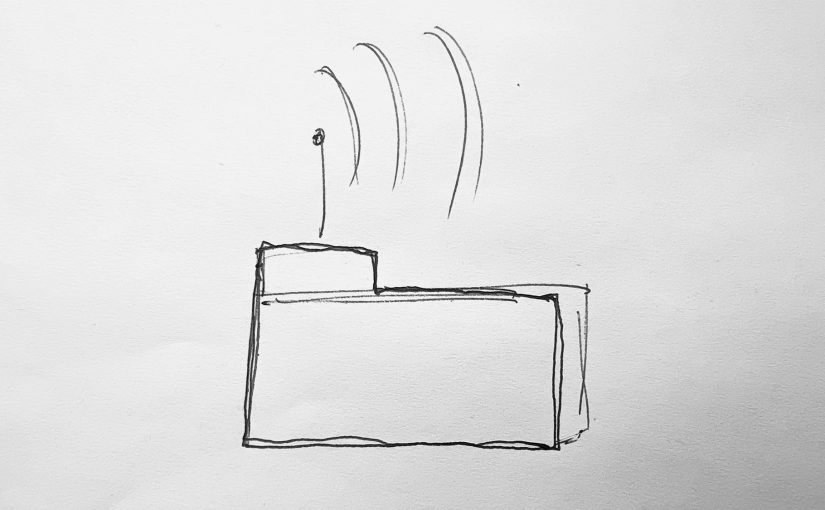
An Infrastructural Counter-Monument
- One Sentence
- The Work
- From Map to Signal
- What the Work Does
- A Different Form of Memorial
- Infrastructure as Witness
- Latency and Potential
- Positioning
- Status
- Reference
One Sentence
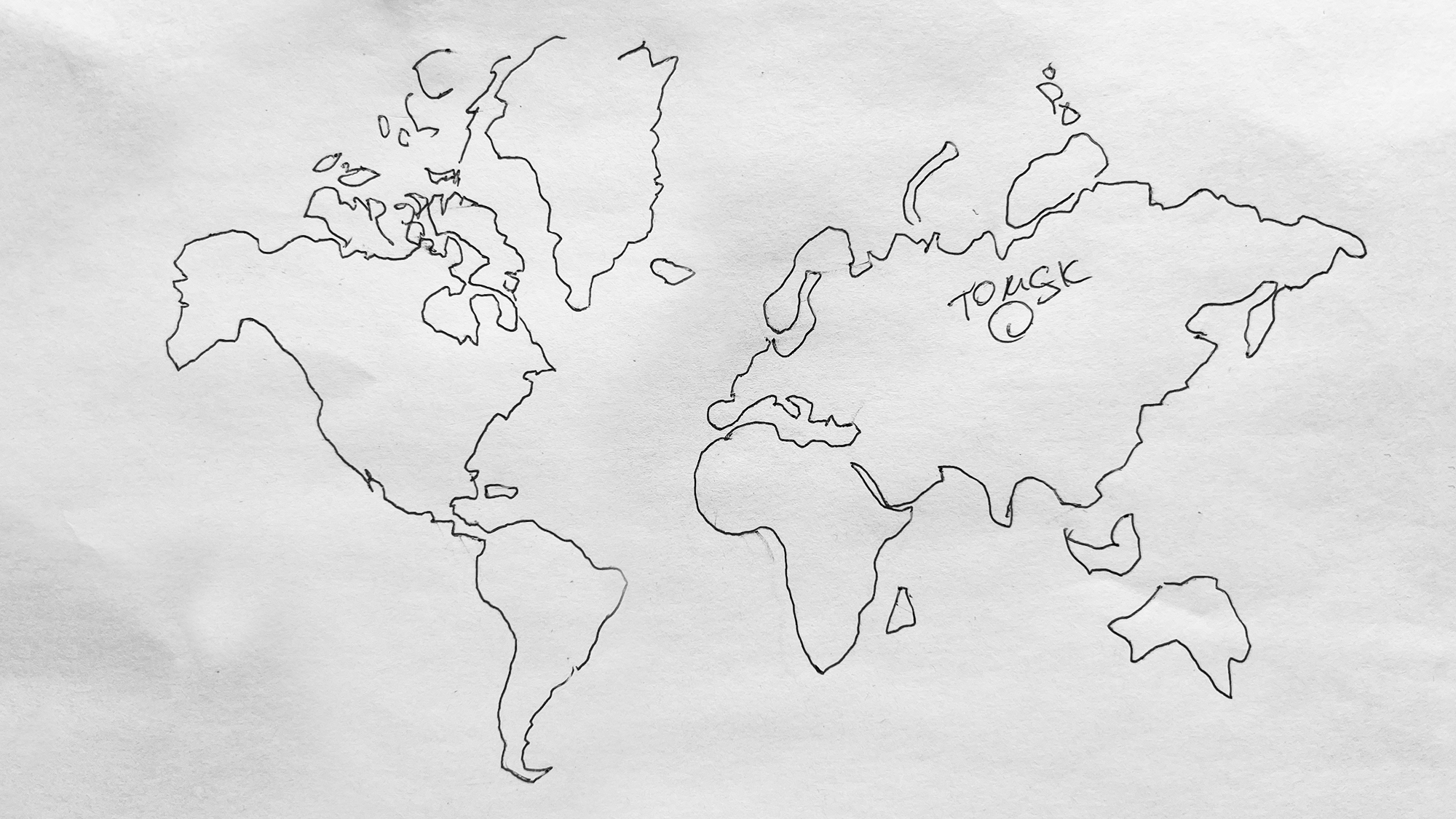
Node Above the Archive is a site-specific infrastructural intervention in which a functioning public mesh node is positioned above the Tomsk FSB archive in Western Siberia, Russia, turning signal, address, and network presence into a memorial form that cannot be removed or erased.
The Work
Node Above the Archive is a research-based art project operating at the intersection of archival investigation, autonomous communication, and urban symbolic space, and forms part of a broader methodological practice developed through the KARAGODIN® Investigation.
At its center is a functioning public Meshtastic node whose coordinates are deliberately positioned above the Tomsk FSB building in Western Siberia — the institutional successor to the Soviet security apparatus and a site where archival materials related to Stalinist repression remain embedded, including documents connected to the execution of my great-grandfather, Stepan Karagodin, carried out by the NKVD in 1938.
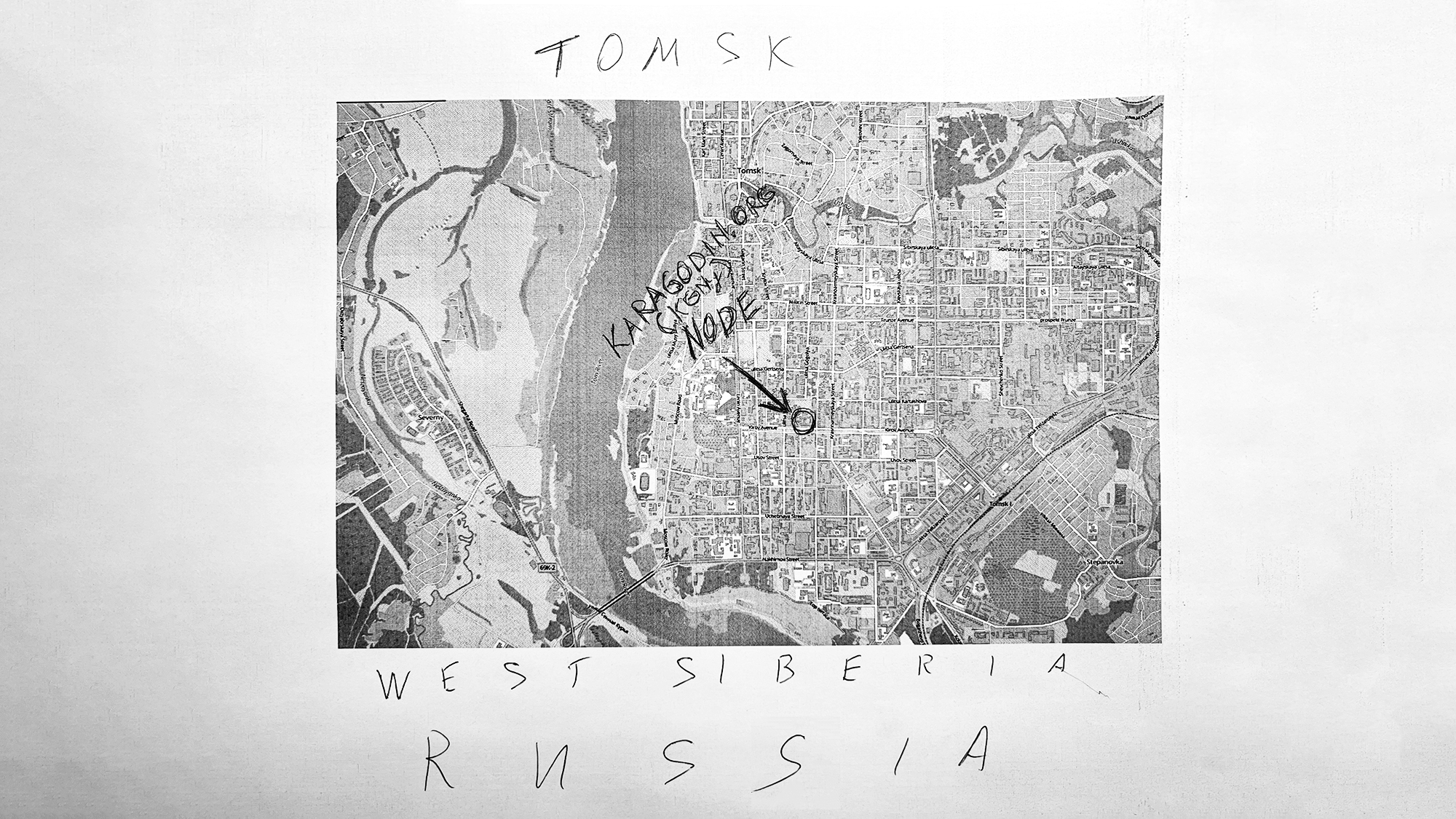
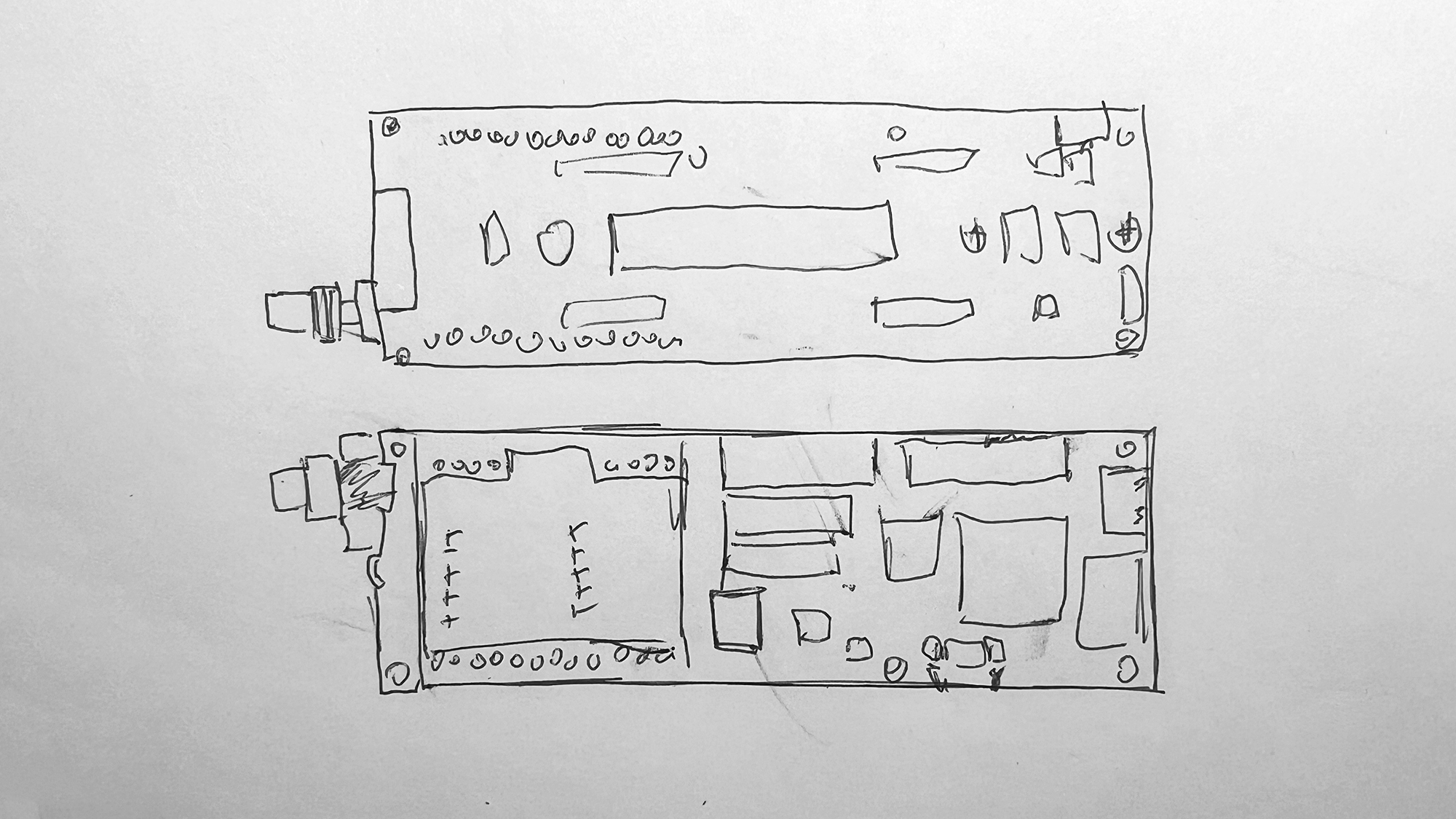
The device itself is physically located in immediate proximity to the building, but not within it; within the logic of the network, however, it remains suspended above the archive.
From Map to Signal
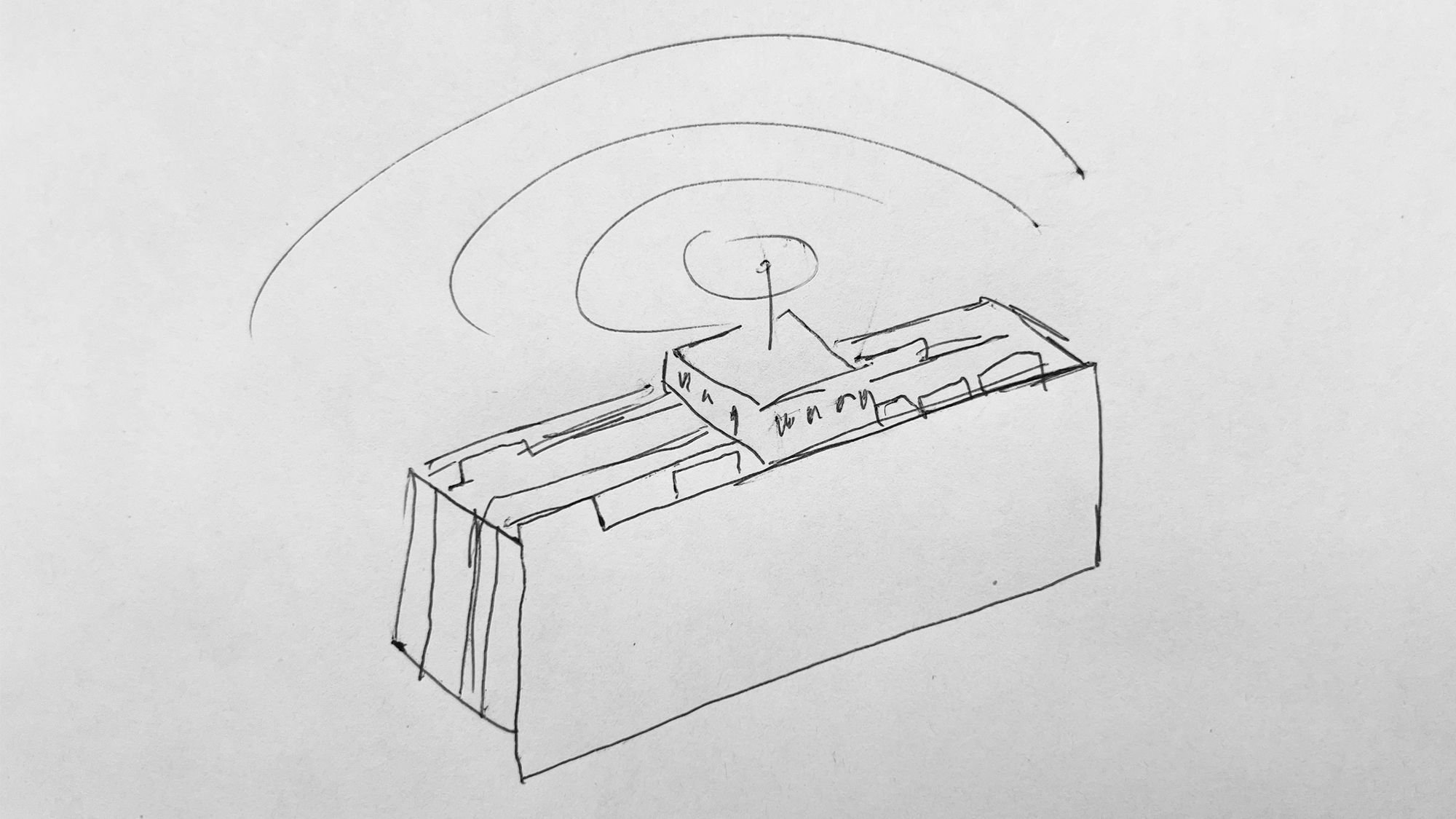
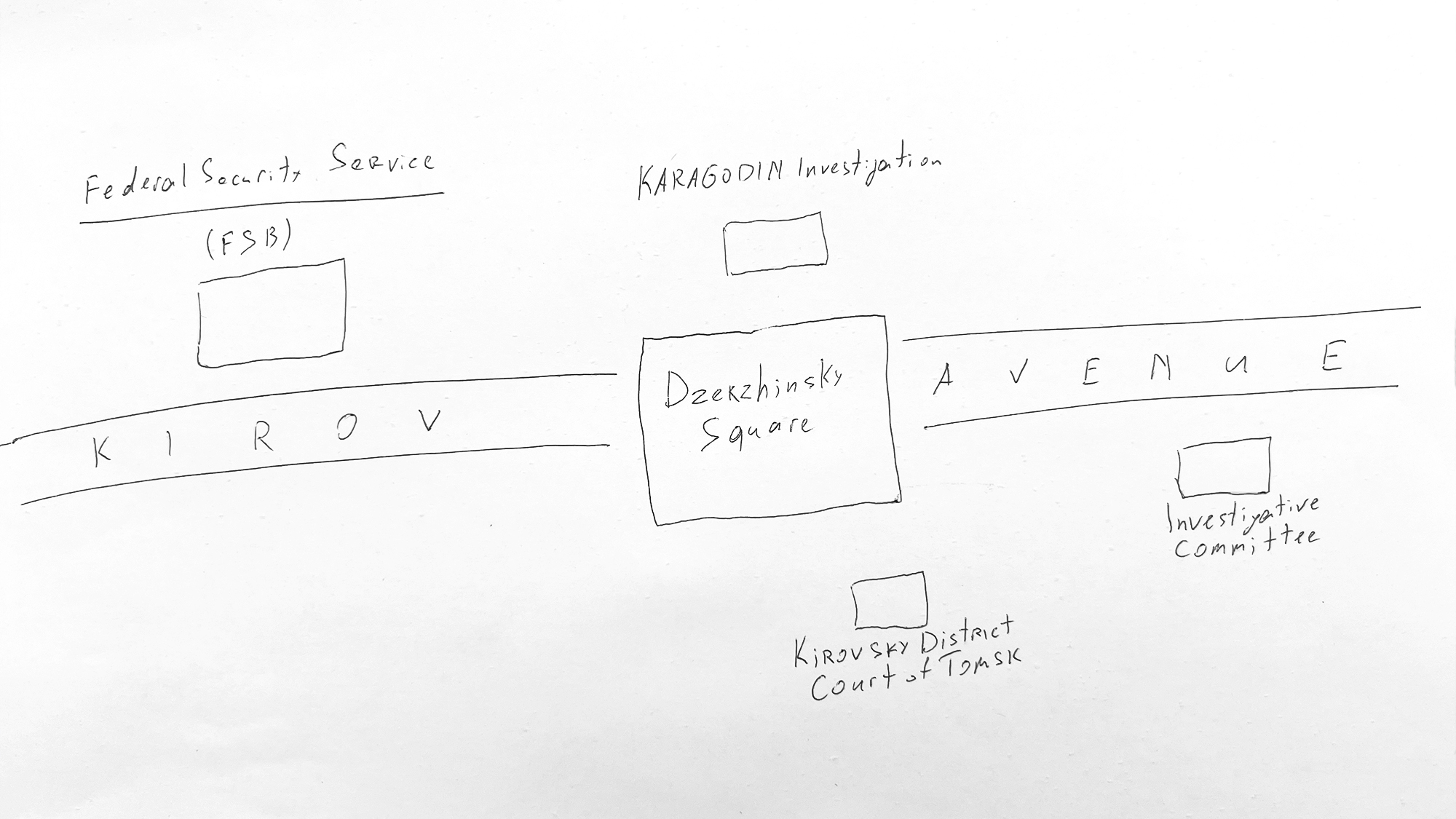
The project unfolds through two linked interventions. It begins with a cartographic insertion, positioning the investigation at the address of the FSB building within mapping systems, and continues with the deployment of a mesh node that establishes a persistent presence in radio space. What emerges is a shift from representation to infrastructure, from pointing at a site to occupying it within a network — a shift that can be replicated across other sites and contexts.
What the Work Does
The project does not enter the institution physically, interfere with its systems, or break the law. Instead, it operates through a regime of institutional evasion, in which presence is established without trespass and address is reassigned without seizure. What emerges is a condition in which an investigative signal persists within a layered institutional and signal-controlled environment — without direct confrontation, yet without invisibility.
A Different Form of Memorial
In contemporary Russia, physical forms of memory are inherently unstable: plaques can be removed, signs erased, and visibility suppressed at the institutional level. A distributed node operates differently. Situated within public radio space and embedded in a civic mesh network, it produces a form of presence that is distributed, operational, and difficult to remove. The work thus functions as a counter-monument — not an object placed before the archive, but a signal maintained above it.
Infrastructure as Witness
The node is not symbolic in a narrow sense but operates as a working communication device. It contributes to a decentralized network environment within a context marked by intermittent internet restrictions, platform blocking, and increasing infrastructural control. Its function is modest, but real. This dual condition is central: the work is both a memorial and a service. It does not merely signify memory but helps sustain the conditions under which communication remains possible.
Latency and Potential
In its current state, the node is largely silent. Like the archive it refers to, it holds information that is not fully accessible, while retaining the technical capacity to transmit. Scripts have been developed that would allow the node to broadcast fragments of investigative material into public radio space. This capacity remains inactive — not absent, but deferred. The node therefore exists simultaneously as a presence, a condition, and a potential event.
Positioning
Node Above the Archive extends the methodological logic of the KARAGODIN® Investigation, and its associated STEPINQUEST® framework, in which archives are approached as active interfaces rather than closed repositories. Here, that logic is displaced into infrastructural space, where signal becomes document, address becomes narrative, and network presence becomes action.
Status
The work is currently active as a functioning node, identified within the network as KARAGODIN.ORG (KGNg), within the urban mesh environment of Tomsk.
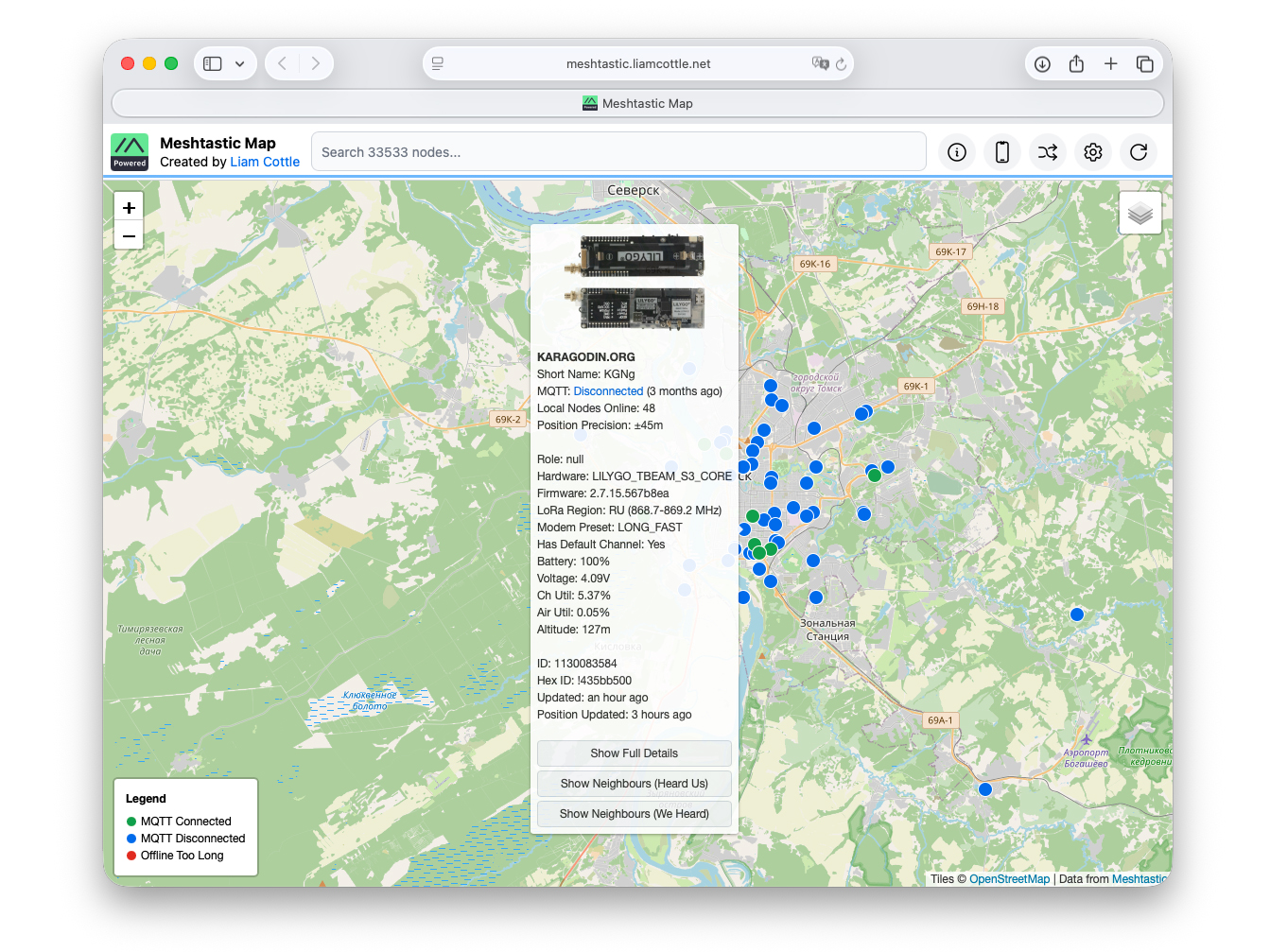
The project is currently being positioned within international curatorial and institutional contexts.
Additional materials, including technical documentation, visual records, and a project dossier, are available upon request.
The project is conceived not as a singular gesture, but as a repeatable infrastructural approach with the potential to be extended across other institutional contexts.
Reference
- A Node Is Placed at a Site of State Power — presents the project in its extended, structured form, establishing its position through a detailed and declarative articulation.
- A Position Is Established — functions as a condensed, authorial explanatory model — a more concise and essayistic account of the same operation.
Support
This work is produced as part of Denis Karagodin’s independent research and writing.
Its continuation is sustained over time through personal effort and, in part, through public support.
Further information: karagodin.com/donate
Discover more from Denis Karagodin
Subscribe to get the latest posts sent to your email.